How to Find Living Cousins Using Descendancy Research (And Why You’re Surrounded by Family)
Oct 01, 2026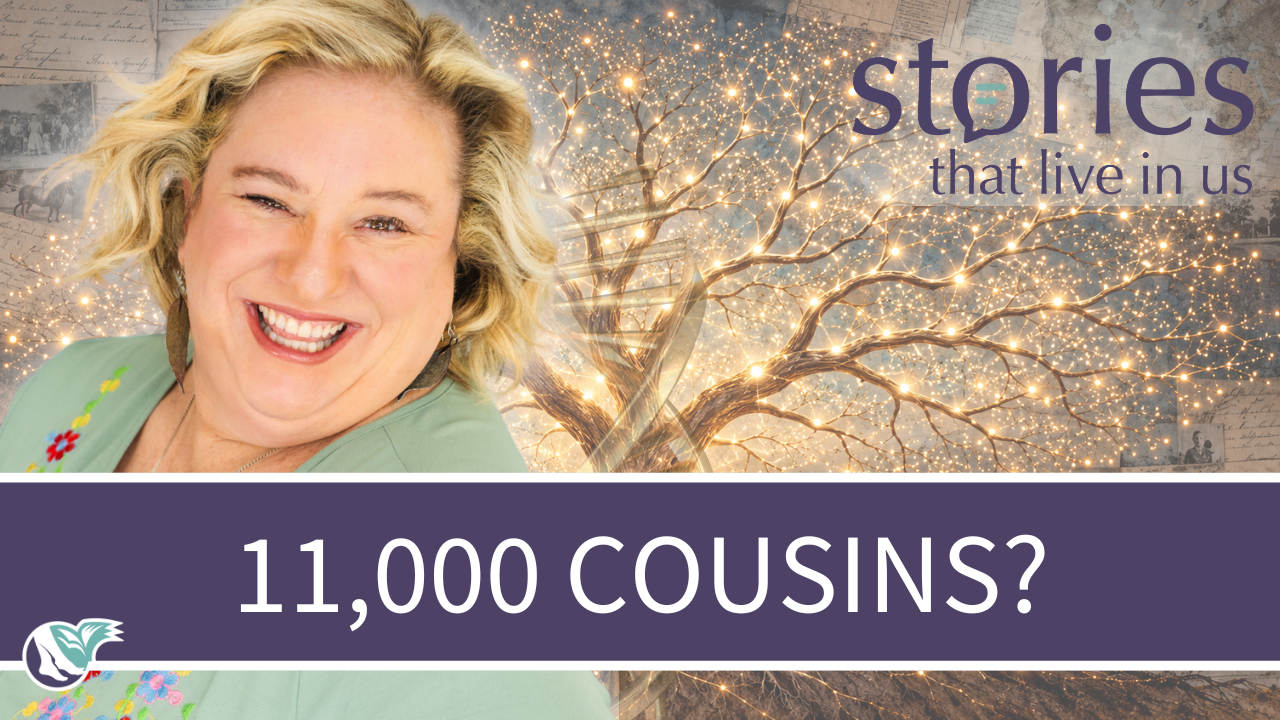
What if the person sitting next to you right now—at work, in church, or in line at the grocery store—isn't a stranger at all? What if you actually share blood, history, or the exact same pieces of ancestral DNA?
A few years ago, I was sitting at a wedding reception when a couple I had never met before sat down next to me. As we introduced ourselves, the husband’s last name kept ringing a faint bell in my brain. I pulled out my phone, opened my Ancestry app, scrolled to a DNA match I had placed in my tree just the Sunday before, and turned the screen toward him.
"Is this you?" I asked. His eyes went wide. It was him.
Within minutes, the groom and his best man out on the dance floor realized they weren't just childhood buddies. They were cousins!
As we kick off National Family History Month, I want to challenge how you look at the people around you. When we explore our heritage, we don't just connect to the past. We start recognizing all the invisible threads that tie us together in the present.
The Whole Story
Watch the full episode here:
Prefer audio only? Click here to listen on your favorite podcast app.
- 00:00 – Introduction: The Wedding Reception DNA Surprise
- 01:29 – Why October Changes How I Think (National Family History Month)
- 03:46 – When a Friend Became a Cousin (Nancy Lott & Pioneer Heritage)
- 06:34 – Descendancy Research & Big Numbers (Samuel Mulliner's 11,000 Descendants)
- 08:39 – My Roommate Was Related to Me (Finding Julie Faldmo in the Tree)
- 10:53 – DNA Threads That Change Your Kindness
- 13:12 – Finding Cousins Through Research & Chance (Wedding Tables & Next-Door Neighbors)
- 20:10 – One Word, One Story: A Garden Memory
- 22:25 – Challenge: Put Stories Out & Watch Them Return
Flipping the Pedigree Chart: What Is Descendancy Research?
Most of us begin our genealogy search standardly: we start with ourselves and work backward to our parents, grandparents, and great-grandparents.
Descendancy research flips that entire process on its head.
Instead of moving backward up the tree, you pick one ancestor back in time and attempt to identify all of their children, grandchildren, and great-grandchildren—tracing every branch all the way down to living descendants today.
"When you pick one ancestor back in time and trace every single branch of the family tree all the way down to the living descendants, you realize just how massive your cousin web really is."
Take my three-times great-grandfather, Samuel Mulliner. He was a Scottish immigrant who migrated across the plains to Utah Valley in the 1850s. My mom and I were so fascinated by his life that we wanted to organize a massive family reunion for the 200th anniversary of his birth in 2009.
In 2005, I rolled up my sleeves to trace his living family. Samuel had 18 children and 98 grandchildren. From there, the numbers exploded. By the time we sent out save-the-date cards, we had identified over 6,800 living descendants. Today, with Ancestry DNA matches filling in missing branches, we have identified more than 11,000 descendants of Samuel Mulliner.
No Strangers: Real-Life Living Cousin Discoveries
Once you begin working with descendancy trees and DNA matches, you start noticing connections everywhere:
- The College Roommate: In 1992, I lived in a tiny apartment in Rexburg, Idaho with a delightful girl named Julie Faldmo. Fifteen years later, while working on the Samuel Mulliner descendancy project, I entered a record for Samuel’s great-granddaughter, Erma Brunt, who married a man named Norman Faldmo. I messaged Julie, and sure enough—Irma was her grandmother. We were half-fourth cousins!
- The Personal Assistant: Back in 1994, I worked as a youth counselor at Brigham Young University alongside Nancy Lott. We became fast friends. After comparing trees, we realized we were 5th cousins through Cornelius Peter Lott. Over 30 years later, Nancy is still one of my dearest friends and works as my house manager and personal assistant.
- The Neighbors: In Pleasant Grove, Utah, my neighbor and dear friend Julie Taggart and I discovered we were 5th cousins through Cornelius Lott. We later discovered her husband, Todd, is my half-sixth cousin through Johannes Balthasar Heiner (born in Thuringia, Germany in 1777). That makes me double related to their kiddos.
Behind the Record: 3 Steps to Tackling a Descendancy Project
If you want to move beyond traditional pedigree charts and discover living relatives (maybe even in your community or circle of friends), use this 3-step descendancy approach:
- Pick a Prolific 19th-Century Ancestor: Choose an ancestor born in the early-to-mid 1800s who had a large family (6+ children). Families in this era grow exponentially over 4–5 generations. Descendants in your generation will be your 4th or 5th cousins.
- Trace Forward Using Census and Vital Records: Work decade-by-decade from 1850 forward. Use census records, birth registers, and death records. Pay close attention to obituaries as a surefire way to trace daughters' married surnames. (This is where most researchers lose track of living branches!)
- Dig Into Your DNA Matches: Search your AncestryDNA Match List for the surnames and birth locations in that descendancy you’ve researched. When new DNA matches appear, compare their tree surnames and locations with your descendancy project.
Story Seeds 🌱
Use one (or all!) of these conversation starters at your next Sunday dinner or family gathering and watch connection grow across generations.
- Have you ever met someone new and instantly felt like you had known them your entire life?
- If you could host a giant family reunion for any of your ancestors, who would you choose and why?
- What is a family surname from your tree that always catches your attention when you hear it in public?
Story Sparks 🔑
Ready to dig deeper into your own family history this week? Here are four practical steps to turn facts into connections.
- Audit Your Roommates & Coworkers: Look up the hometowns and maiden names of close friends, former roommates, or colleagues in your family tree database.
- Share an Ancestor's Bio: Post a short 2-paragraph story of a 4th-great-grandparent on Facebook or Instagram. You might be surprised who comments, "Wait, he's my ancestor too!"
- Review DNA Matches Weekly: Set aside 30 minutes every Sunday night to look through your newest DNA matches and place them on your descendant branches.
- Start a Facebook Group: Choose one ancestor (or ancestral couple) and create a Facebook group with their name. Then start inviting your cousins who descend from them. Share stories and photos. Keep the group public so more cousins can find you.
Connect Your Living Legacy
Discovering that we share ancestral DNA changes how we see the world. It can make us a little kinder, a little more curious, and a lot more patient with the person standing in front of us.
Want to receive weekly story prompts, research strategies, and encouragement delivered straight to your inbox?
👉 Sign up for my weekly newsletter - Sunday Stories with Crista
© 2026 Crista Cowan. All rights reserved.