Mississippi: Finding Far East in the Deep South
Feb 19, 2026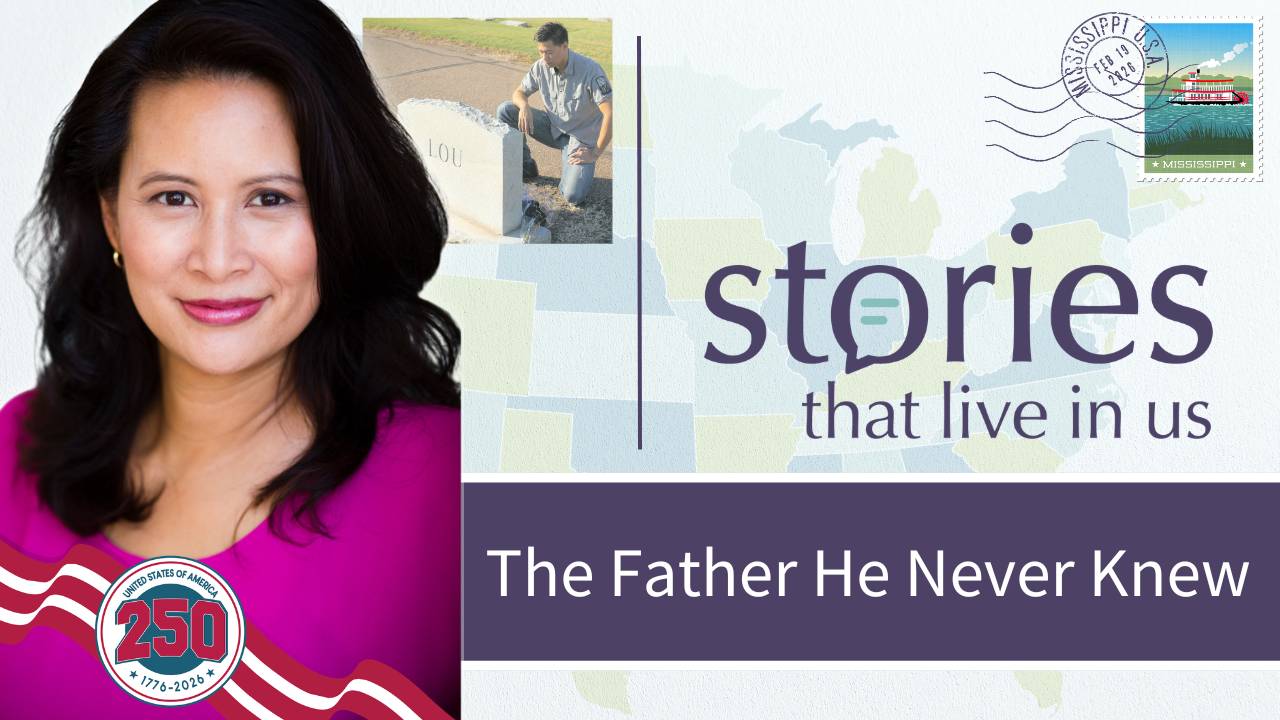
Have you ever stood at the edge of a family mystery so big you didn't even know it existed? What if the answer to why your family looks the way it does, why certain stories were never told, why certain relatives seemed to simply vanish from the record — was buried not in the past, but in a policy, a law, a government act that nobody ever taught you in school?
That's the question at the heart of one of the most extraordinary family history stories I've ever had the privilege of sharing on this podcast.
When filmmaker and music executive Larissa Lam boarded a plane to Mississippi with her husband Baldwin and his father Charles, she thought she was going on a simple family trip. Put flowers on a grave. Maybe have a nice dinner. Head back to California. She had no idea she was about to walk into a story that would take her a decade to tell.
From a Single Grave to a Documentary
Larissa describes herself, pre-Mississippi, as someone who "had no idea that archives could be such a valuable source of information." She was a music executive. A singer and songwriter. A talk show host. A documentary filmmaker? Not even close to being on her radar.
But sometimes a family story finds you before you're ready for it.
"We thought we would put some flowers on the grave, go back to California, and never go back. And what ended up happening is what unfolds in Far East Deep South."
What unfolded was staggering. Her father-in-law Charles, a Chinese American man who had served in the U.S. Air Force and deeply loved this country, had grown up with almost no knowledge of his own father. He'd come to the United States at age fourteen with only his grandmother. He believed, for most of his life, that his father had abandoned him. And that belief had calcified into something painful, something he carried quietly for decades.
What that trip to Mississippi began to crack open, slowly, over multiple visits, through archives and museum discoveries and conversations with community elders, was the truth. And the truth was both more complicated and more tender than anyone had imagined.
The Chinese in Mississippi: A History Most of Us Never Learned
Here's something I didn't know before this conversation, and I suspect most of you didn't either: after the Emancipation Proclamation, plantation owners in the Mississippi Delta faced a labor shortage. The formerly enslaved African Americans who had been forced to work those fields were, finally, free to leave. And many of them did.
So where did plantation owners turn? They recruited Chinese workers. First from other parts of the country. Then directly from China. These men came hoping for the riches that had been promised. What they found was grueling sharecropping labor and a raw deal. When the Chinese Exclusion Act passed in 1882, Chinese workers could no longer legally enter the country for labor. But there was a loophole: merchants could stay.
And so, grocery stores.
The Chinese community in the Mississippi Delta pivoted. They became grocers, general store owners, merchants. And because white-owned stores refused to serve Black customers, the Chinese stores became something remarkable — a safe space during Jim Crow. An honor system of credit when sharecroppers could only be paid once or twice a year. Dignity offered quietly across a counter when the rest of the world wouldn't.
"Our family wouldn't have survived if it wasn't for the fact that we could just walk into a Chinese store and they let us take stuff on credit and just pay you back later."
These words from a member of the Black community Larissa interviewed were humbling. This is American history. And most of us have never heard it.
The Whole Story
If you haven't already listened to my full conversation with Larissa, you need to carve out time for this one:
Prefer audio? Click here to listen on your favorite podcast app.
🎧 Listen to the full episode to discover:
- How a chance question at a film festival Q&A sent the family to the National Archives in San Bruno — and what they found there
- The specific way the Chinese Exclusion Act kept Charles's father from coming home to his family, and why that matters for how we understand his story
- What Larissa found in a Mississippi museum that made her father-in-law sob in the corner for five minutes — and what his young granddaughter did next
- Why about 60% of a critical category of genealogical archives may disappear in the next decade (this affects more families than you think)
- The moment Larissa realized she wasn't just making a family film — she was making American history
The Power of One Story
There's a moment in this conversation that I keep thinking about.
Larissa's father-in-law Charles grew up believing his father had abandoned him. That belief shaped him. It was a wound he lived with for decades, quietly, the way immigrants often live with pain — grateful to be here, not wanting to make a fuss about the hard parts.
And then, in a museum in Mississippi, the family found a Bible. His father's Bible.
"I always say we could have found his dictionary and it wouldn't have held the same power," Larissa told me. But it was a Bible. And Charles had become a deeply faithful Christian. And when he held that book — his father's book — something broke open.
He went and stood in the corner and cried for five minutes. His granddaughter, just fifteen months old, ran over and hugged his leg.
Larissa's camera malfunctioned at that exact moment. She didn't capture it on film. And here's what she said about that:
"I'm kind of glad that maybe we don't have it because it allowed my father-in-law Charles to have that moment to himself."
That's the thing about family history. The most important discoveries aren't always the ones that make it into the documentary. Sometimes the most important moment is the one that only lives in the hearts of the people who were there.
That healing — that shift from "my father abandoned me" to "forces bigger than both of us kept us apart, and here is proof that he loved me" — that's what family history can do. Not just fill in dates and names. Reframe an entire story. Lift a weight someone has been carrying for a lifetime.
Your Story
You might not have a documentary waiting inside your family tree. (Then again, you might — and you don't know it yet.) But somewhere in the names on your Ancestry family tree, somewhere in those AncestryDNA matches you haven't clicked on yet, there is probably at least one person who carried a wound they never got to heal. One story that was lost to silence, to shame, to geography, to policy.
What if you could be the one to find it?
What if a single census record, a single letter in a box, a single DNA match that leads you to a second cousin you've never met — what if that's the thing that changes how your family understands itself?
I've seen it happen. Larissa's family lived it.
Story Seeds 🌱
Plant these conversation starters and watch your family stories grow.
- For your parents or grandparents: "Were there relatives in our family — people in our tree — who seemed to just disappear? Who stopped being talked about? Do you know what happened to them?"
- For aunts, uncles, or older cousins: "Did our family ever talk about discrimination or hardship they faced because of who they were — their race, their religion, where they came from? What do you remember hearing about that?"
- For anyone who remembers your grandparents: "What did our family do to survive during hard times? Was there a community — a church, a neighborhood, a store — that helped hold everyone together?"
- For yourself, in your own research: "Is there a relative in my tree who seems to vanish after a certain year? What was happening in history at that moment that might explain why?"
Story Sparks 🔑
Unlock your family's hidden stories with these research techniques.
- Search for your ancestors in Chinese Exclusion Act case files. If you have Chinese ancestry — or suspect you might from a DNA match — the National Archives holds an extraordinary collection of records created specifically because of the Chinese Exclusion Act. These files often contain photos, statements, family relationships, and physical descriptions that you won't find anywhere else. Start at archives.gov and search for "Chinese Exclusion Act case files" to find the regional collection relevant to your family.
- Use Ancestry's Card Catalog to find ethnic and community-specific records for your family's location. Filter by state and date range, then look for collections tied to specific religious communities, ethnic newspapers, or fraternal organizations your ancestors may have belonged to. Communities that were marginalized often kept meticulous records of their own — church registers, lodge minutes, foreign-language newspapers — that mainstream genealogical databases don't highlight prominently.
- Look for your ancestors in the records of the communities around them, not just their own. Larissa's family story came into focus partly through what the Black community in Mississippi remembered about the Chinese grocery store owners. Census records, city directories, and local histories from neighboring communities can reveal details about your ancestors that their own records never captured. Who did they sell to? Who did they worship near? Who testified at their naturalization? The people around your ancestor often knew them in ways the official record didn't document.
- When you find a DNA match from an unexpected location or background, don't skip it — dig in. One of the things that makes Larissa's story so powerful is that her family didn't know the Mississippi connection existed until they went looking. Your DNA results may hold geographic surprises that point you toward a chapter of your family story nobody has told yet. Start by building a small tree for your unexpected match and see where the branches lead. You might just end up in Mississippi.
There's an urgency Larissa carried throughout our conversation that stayed with me long after we finished recording. Half the people her team interviewed for Far East Deep South have already passed away. The elders who remembered, who knew, who were there — they are leaving us.
And Charles, her beloved father-in-law, the man whose story the film was ultimately built around, passed away last year.
The stories are there. The people who hold them are still, for now, here. Go ask your questions while you still can.
Ready to discover more stories like this one? Subscribe to Stories That Live In Us wherever you get your podcasts. And if this episode moved you, please take a moment to leave a rating and review — it's the single best way to help other family story seekers find us.
You can watch Far East Deep South on Amazon Prime Video, Apple TV, PBS, Tubi, and other streaming platforms. Visit fareastdeepsouth.com for more information, and giantflashlight.com to follow Larissa's upcoming projects, including her next documentary about Virginia Wing, the first woman of color to compete in the Miss Mississippi pageant.
© 2026 Crista Cowan. All rights reserved.