From Utah to Iceland: How to Pass Living Heritage to the Next Generation
Sep 10, 2026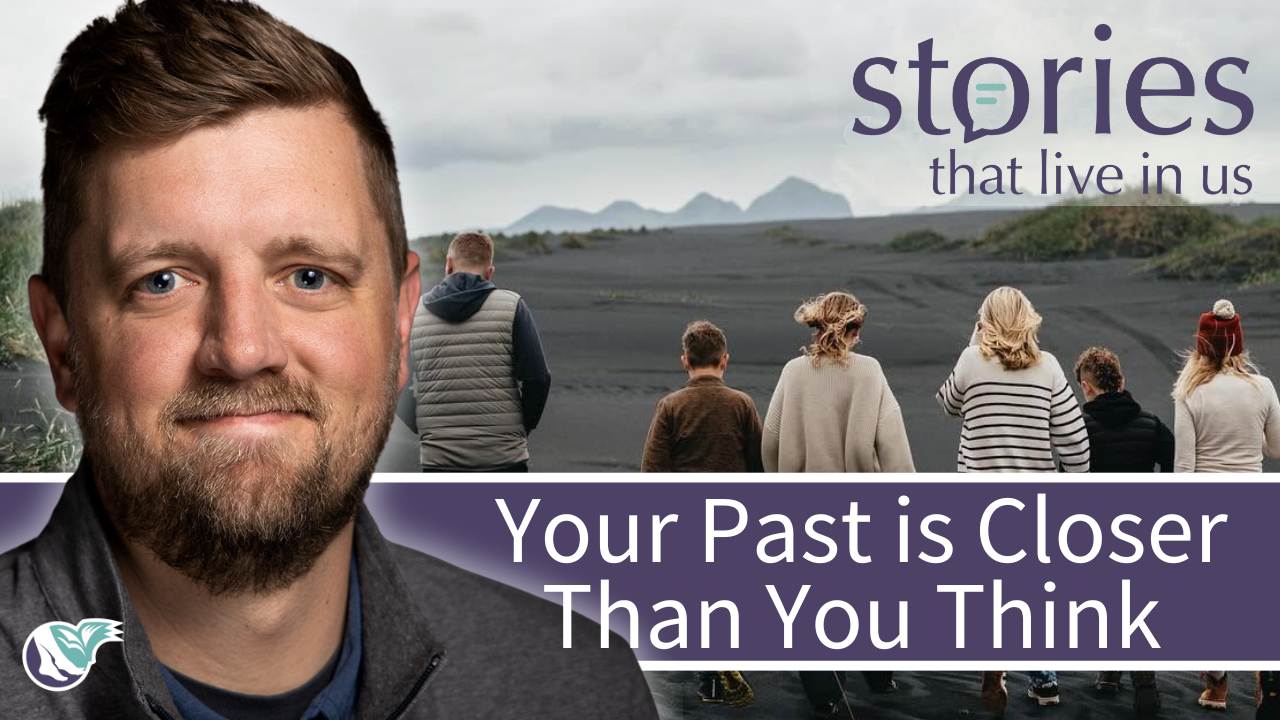
When we talk about family history, so many of us share the same quiet wish: we want our children and grandchildren to be interested. We want them to know who they are, where they come from, and whose shoulders they stand on. But if you have ever tried sitting a teenager down to look at a census record or a list of birth dates, you know that eyes can glaze over pretty quickly. (Unless they are a unicorn teenager like I was!)
So how do we move our families from begrudging attention to genuine, heartfelt connection?
In our latest episode of Stories That Live In Us, my friend Eric Allen returned to share how an intentional trip from Spanish Fork, Utah, all the way to the volcanic coasts of Iceland transformed his children's understanding of their heritage. Along the way, he discovered that passing family heritage to kids isn't about memorizing names and dates and places. It’s about creating experiences, honoring kitchen traditions, and paying attention to the astonishing ways our ancestors' lives intersect with our modern world.
The Whole Story
Catch the full conversation with Eric Allen in the video here:
Prefer audio only? Click here to listen on your favorite podcast app.
- 03:48 - The Icelandic Connection: Why Pioneers Immigrated to Spanish Fork, Utah
- 07:48 - Monuments on Two Shores: Matching Historical Markers in Utah & Iceland
- 09:09 - Taking Kids from Cemetery to Volcanic Coasts: Moving from Compliance to Connection
- 13:47 - Íslendingabók & Lost Stories: Moving Beyond Names and Dates on a Tree
- 20:30 - The Unbelievable Workplace Coincidence: Two Ancestors, One Tiny House (Jónshús)
- 25:31 - One Word, One Story: Cake Wars
Moving Beyond "Polite Compliance"
When Eric first began exploring his Icelandic heritage as an adult, he realized his four children didn't have that same sense of connection. To bridge that gap, he didn't start with complex genealogical charts. He started locally.
Before taking his family to Iceland, Eric brought his kids to the Spanish Fork Cemetery in Utah. They visited the gravesites of their Icelandic ancestors, Jakob Bjornsson and Guðrún, and stood before the local monument built to honor the early settlers who immigrated from Iceland in the late 1800s.
"I wanted my kids to really connect with Iceland... it felt like I wanted to show them that. So we went down to Spanish Fork Cemetery where my Icelandic ancestors are buried... and then we went and took photos at that monument before we ever went to Iceland. So then they could come full circle."
By the time the family arrived in Iceland and traveled out to the Westman Islands (Vestmannaeyjar), the history was no longer abstract. Standing near the volcanic coast where their great-great-grandfather once lived, Eric watched his ten-year-old son reach out to touch a historic ship display at a local museum. The boy looked at his mother and asked her to take a photo of him touching history.
Those are the moments that turn our kids from passive listeners turn into caretakers of their legacy. Those are the moments the next generation of family historians are born.
Kitchen Traditions & Living Memories
Passing heritage down doesn't always require an overseas flight. Sometimes, it happens right at the breakfast table.
For Eric, one of his fondest memories of his grandfather was eating what the family called "roll-up-ers." He describes them as long, thin pancakes spread with butter and cinnamon sugar, rolled tightly like a cigar. Years later, when Eric's parents served an LDS mission in Iceland, he learned that this wasn't just a quirky family recipe; it was a traditional Icelandic treat that had survived generations of migration.
Heritable memories also live in shared rhythms:
- Giving Books on Christmas Eve: Adopting the cozy Icelandic tradition of exchanging books on Christmas Eve and spending the evening reading together.
- Sharing Stories of Hardship: Helping kids understand that ancestors faced famines and hard choices so that future generations could thrive.
- Creating Visual Touchpoints: Keeping ancestral photos or legacy keepsakes (or family tree charts 😉) where family members see them every day.
The House at the Edge of the World: An Unbelievable Coincidence
Perhaps the most astonishing part of Eric’s story is a discovery he made right at work.
After working alongside a teammate named Andy Geslison for six years, Eric casually mentioned his upcoming trip to Iceland. Andy shared that his own family had deep roots on the Westman Islands. Curious, the two began comparing notes.
While Eric and Andy didn't share enough DNA to be close cousins, their research revealed something jaw-dropping. In 1885, Andy's great-grandfather, Gísli Gíslison, left Iceland after living in a specific home called Jónshús (John's House) on the Westman Islands. Just five years later, in 1890, Eric's second great-grandfather, Jakob Bjornsson, was recorded living in that exact same house.
Both men left that tiny island, immigrated to Spanish Fork, Utah, lived half a mile from one another, and worked for the same railroad line according to the 1910 U.S. Census. Fast forward 140 years, and their descendants were sitting in the Ancestry headquarters working on the same team.
Stories like this remind us that our ancestors' lives aren't far away. Their stories intersect with our present day in ways that could give you actual goosebumps.
Behind the Record: Research Methods & Tools
If you are looking to trace your own family connections across the ocean, here are three actionable methods highlighted in this episode:
1. Navigating Íslendingabók (The Book of Icelanders)
Iceland holds one of the most complete national genealogical databases in the world. Íslendingabók traces the family trees of almost all Icelandic citizens back to the settlement period. While full access requires an Icelandic social security number, connecting with living relatives or researchers in Iceland can help you link directly into an already-verified national tree.
2. Cross-Referencing Local Censuses with Employment Records
When Eric and Andy suspect their ancestors knew each other in Utah, they turned to the 1910 U.S. Federal Census. By examining neighboring households and comparing occupation fields (such as railroad workers), they confirmed that their ancestors lived half a mile apart and shared the same employer.
3. Leveraging Twin Monuments
Many immigrant communities built twin monuments. There was one in their new hometown and one in their original village across the sea. The monument in Spanish Fork, Utah, features a lighthouse listing the names of Icelandic pioneers who immigrated between 1855 and 1914. An identical monument stands near Mormon Pond on the Westman Islands in Iceland, allowing family members to experience matching historical markers across continents.
Story Seeds 🌱
Use one (or all!) of these conversation starters at your next Sunday dinner or family gathering and watch connection grow across generations.
- What is a specific food tradition or family recipe that instantly reminds you of your childhood?
- If you could take our family on a trip to visit the exact town where an ancestor lived 100 years ago, where would you want to go?
- Have you ever discovered a surprising connection between a friend or colleague and someone in your past?
- What is one story of hardship or resilience from our family tree that inspires you when things get tough?
Story Sparks 🔑
Ready to dig deeper into your own family history this week? Here are four practical steps to turn facts into connections.
- Search for Local Pioneer or Immigrant Markers: Check if your state or town has dedicated monuments or historical markers listing early settlers and immigrants.
- Explore Neighbor Networks in Census Records: Don't just look at your relatives in the census. Scan the pages before and after to see if neighbors shared the same birthplace, immigration year, occupation, or collateral surnames.
- Document Food Memories: Record elder family members making traditional family recipes, noting both the steps and the stories behind the food.
- Prompt with Visual Legacy: Display a family tree with ancestral photographs in high-visibility areas of your home to give children a daily, familiar connection to their roots.
Ready to Bring Your Family Stories to Life?
Connecting your kids to their past doesn't have to be overwhelming. Inside our membership community, pajamas & pedigrees™, we help you turn raw records into living stories that spark genuine curiosity across generations.
Join pajamas & pedigrees™ today to access monthly workshops, practical guides, and a warm community of storytellers dedicated to preserving family legacy!
© 2026 Crista Cowan. All rights reserved.