How to Research Black Sheep Ancestors: The Taped-Over Photo That Exposed a 19th-Century Con Artist
Oct 15, 2026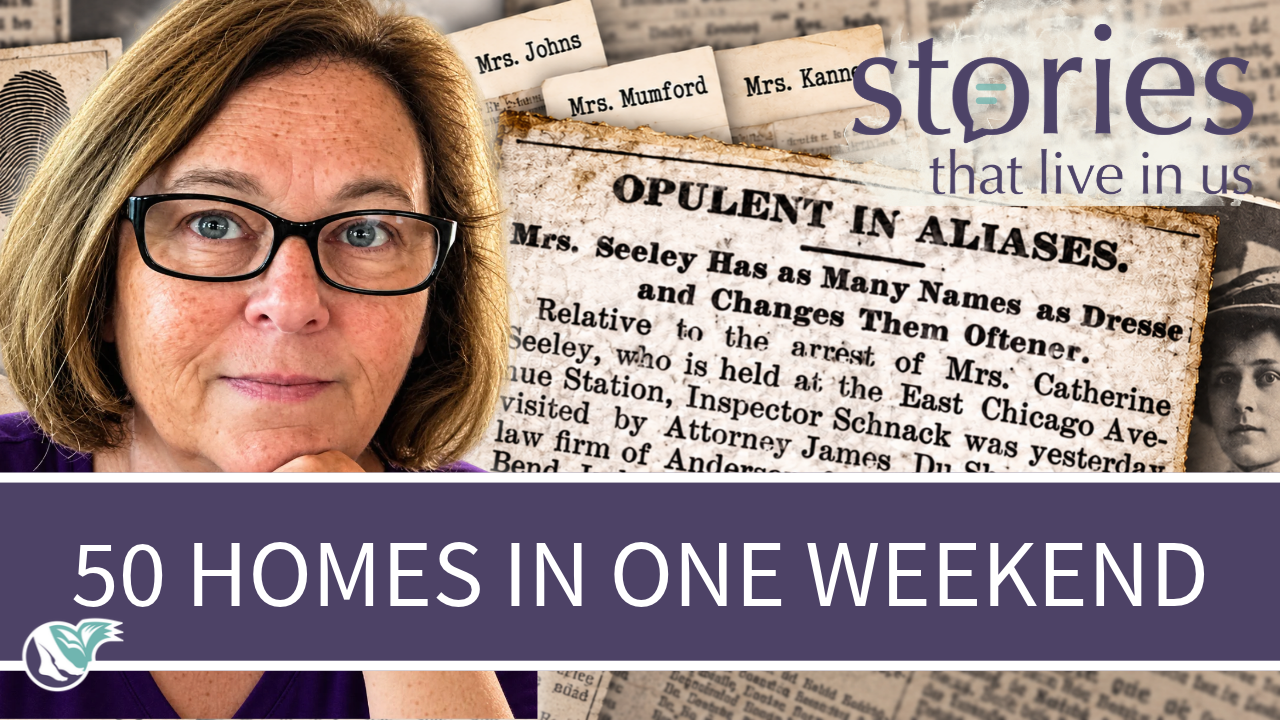
Have you ever stumbled across an old family record that made you stop and ask, "Who were you, really?"
Most of us grow up with sanitized, polished versions of our family histories. We hear about the quiet heroes, the hardworking pioneers, and the sweet bedtime legends. But what happens when you start digging into the archives and uncover someone completely, unapologetically scandalous?
In the latest episode of Stories That Live In Us, I sat down with author and researcher Deborah Holman. She shared the unbelievable story of how a single piece of yellowed paper physically taped over a portrait in a 1976 family history booklet led her down a two-year rabbit hole into the life of her husband’s great-grandmother, Catherine Seeley.
What Deborah found wasn't just a missing census entry. She found a 19th-century master con artist who operated under dozens of aliases across the American Midwest.
The Whole Story
Watch the full conversation with Deborah Holman below, or jump to key moments in her research investigation:
Prefer audio only? Click here to listen on your favorite podcast app.
- 6:32 - The physical clue: Finding the taped-over name in a 1976 family history booklet.
- 11:51 - From 50 home burglaries in one weekend to fake charity passes.
- 9:27 - Untangling multiple aliases using mind maps and spreadsheets.
- 27:23 - How the family transformed shock into honoring an unvarnished legacy.
50 Burglaries, 12 Aliases, and One Handwritten Crime Ledger
When Catherine Seeley's husband sued her for divorce in 1888, she didn't quietly retire. Operating out of Kansas City, Chicago, and Albany, Catherine launched a 20-year criminal career that reads like a movie script.
She ran fake orphanages, tricked railroad companies into giving her free travel passes, and broke into 50 homes in a single town over a single weekend. At 60 years old! Whenever she got caught, she would pull the "confused elderly woman" act to escape.
"You could not make this up if you tried. She had two accounting books where she would write down everything she made wherever she went... She wants to be seen and valued as a high-society woman, but she chooses crime."
At one point, Catherine even petitioned a St. Louis judge to officially change her name to Countess Karina Pontsforte, claiming she had simply dropped her noble birth name years earlier. The judge denied the request. But the headline stuck and earned her the nickname that inspired Deborah’s book, The Countess of Cons.
Behind the Record: Technical Spotlight on Researching Aliases
When an ancestor actively tries to hide their identity, standard census searches fall short. Here are two practical methodology frameworks Deborah used to untangle Catherine’s complex paper trail:
1. Cross-Referencing Historical Newspapers Across Locations
In the 1880s and 1890s, small-town newspapers reported local gossip, court proceedings, and police blotters with astonishing detail. When searching for an elusive relative:
- Search by associated family names (like children or ex-spouses) rather than just the target ancestor's name.
- Look for specific geographic anchors (such as Kansas City, Albany, or Chicago) where extended FAN club members lived.
- Search for unusual phrases or unique event details rather than complete names.
2. Mind Mapping Complex Criminal Trails
When tracking an ancestor using multiple aliases, linear timelines break down. Borrowing a technique from genealogical researcher Ron Arons, Deborah used visual mind mapping alongside Excel spreadsheets to link different names to shared physical addresses, court dates, and family connections.
From Family Shame to Unvarnished Heritage
Uncovering a "black sheep" can cause immediate friction with living relatives. When Deborah first shared her findings with her sister-in-law in 2018, the reaction was hesitant. She didn't want her grandmother written about as a "crazy, drunk Irish woman."
But as they talked through the records, their perspective shifted. They realized Catherine was also a fiercely independent woman in an era that offered few choices for divorced women. Facing the truth didn't destroy their family pride; it gave them an honest, authentic view of their roots.
Story Seeds 🌱
Use one (or all!) of these conversation starters at your next Sunday dinner or family gathering and watch connection grow across generations.
- Is there a story or individual in our family tree that people used to whisper about or avoid discussing?
- If you could ask our most mysterious ancestor one question about their choices, what would it be?
- How do you think our family's definition of "success" or "respectability" has changed over the generations?
- What is one tradition or trait in our family that might have come from a rogue or rebel ancestor?
Story Sparks 🔑
Ready to dig deeper into your own family history this week? Here are four practical steps to turn facts into connections.
- Examine physical family heirlooms closely: Look at the backs of framed photographs, margins of old Bibles, or taped-over entries in self-published family booklets for hidden clues.
- Search newspaper archives using unique land or court terms: Search court blotters for land disputes, divorces, or probate notices involving extended in-laws.
- Map out known associates: Build a cluster research chart (the FAN principle: Friends, Associates, Neighbors) for anyone who lived near your target ancestor.
- Obtain maternal and collateral wills: A mother’s or sibling’s will often mentions estranged or hidden children that censuses miss.
Honor Your Whole Story
Your family tree isn't made exclusively of saints. That is one of the things that makes your heritage so rich and human. Embracing the unpolished truths about where we come from allows us to see our ancestors as real people navigating complex lives.
Want more weekly ideas for discovering and sharing your family's authentic stories?
👉 Sign up for my free weekly newsletter - Sunday Stories with Crista