Indiana: Been Here All Along
Feb 26, 2026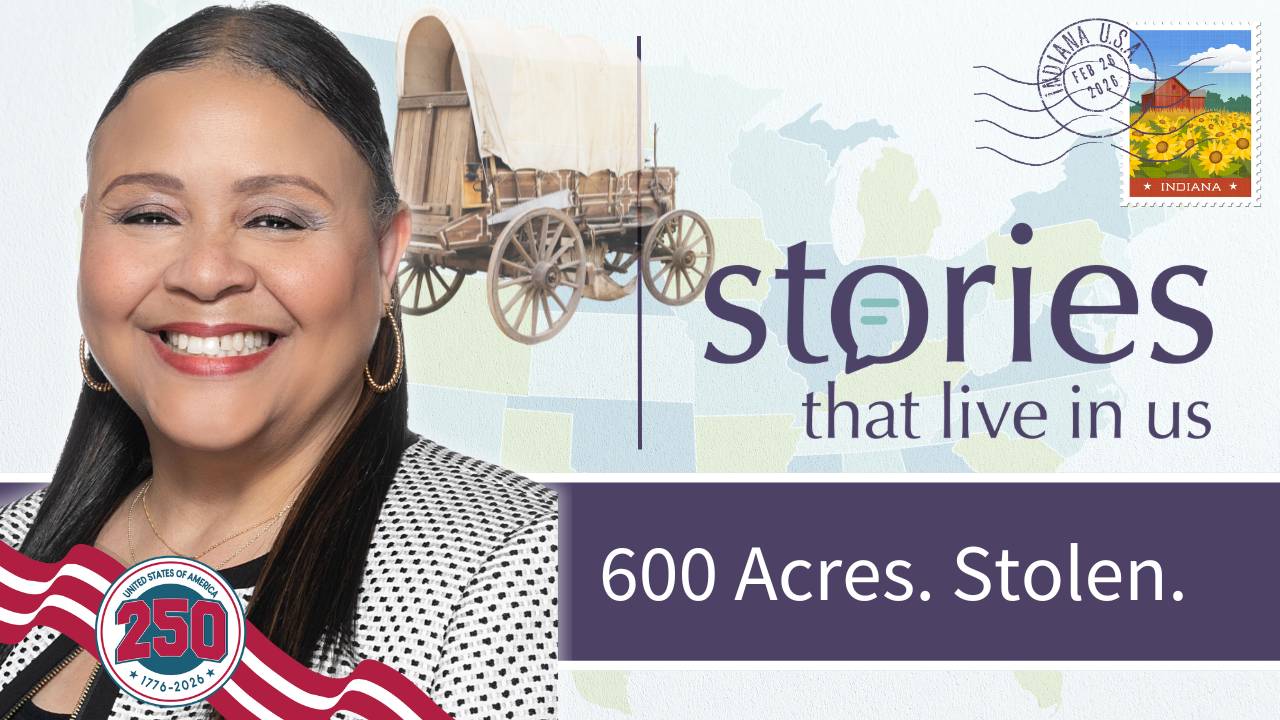
Have you ever stopped to wonder whether someone in your family tree was part of American history before there was an America? Not just a bystander to it but woven so deeply into the fabric of this country that their story predates the Declaration of Independence itself?
That question is at the heart of one of the most remarkable family stories I've ever had the privilege of sharing on this podcast. And I can't think of a better story to mark our 100th episode. (One hundred! I'm having a lot of feelings about this, and I'm not even going to pretend otherwise.)
My guest, Lisa Fanning, is a board member of the National Genealogical Society, DNA expert, and the kind of genealogist who doesn't stop searching until she finds the answer. Which, as you're about to discover, is a very good thing. Because the story she uncovered isn't just her family's story. It's America's story.
From "Old Daddy Lum" to a Covered Wagon Caravan
Lisa grew up in Richmond, Indiana, in a family full of storytellers. One side of her extended family migrated from Tennessee generations earlier. The elders loved talking about those colorful relatives, especially a figure they called "Old Daddy Lum." As a little girl, Lisa heard those stories and thought the southern accent her great-aunt carried was melodic and mysterious. She wanted to know where they came from.
That curiosity eventually led her to the National Archives in Washington, D.C. In 1995. Just two years before census records started going online. (Talk about perfect timing.) And once she started digging, she couldn't stop.
When she finally called her great-uncle Roscoe to ask about her grandfather's family, what he told her stopped her cold. He said that their ancestors on that side of the family tree had come from North Carolina. Not as individuals but as a caravan. Six families settling in a place in southern Indiana called Lost Creek.
"What do you mean, a caravan?" Lisa asked.
"You know," Roscoe said. "Like covered wagons."
I have to be honest with you. When Roscoe said "like covered wagons," I would have been done. That would have been enough for me. But Lisa kept going. And what she found when she did is the kind of story that makes you realize why we dig into our family history to begin with. Because covered wagons aren’t even the beginning of the story.
The Whole Story
If you haven't listened to Lisa's story yet, stop right now and do that. I mean it.
Prefer to listen on the go? Click here to find the episode on your favorite podcast app.
🎧 In this episode, you'll discover:
- The story of Lost Creek — one of approximately 30 free Black settlements in Indiana that most of us were never taught about in school
- How the Anderson family was freed from enslavement in 1712 and given 600 acres of land in what is now Norfolk, Virginia — land that is today the site of a U.S. Naval installation
- The legal fight that followed when a colony refused to honor a will that freed enslaved people and gave them that prime Virginia land
- How Lisa used DNA to connect the dots across state lines — and how her great-uncle Roscoe's test unlocked a Sardinian DNA segment and a British Isles maternal haplogroup that nobody saw coming
- The story of an eight-year-old girl named Mary Underwood, found in an 1800 indenture record, whose story completely reframed everything Lisa thought she knew
- And Kate Anderson — Lisa's eighth great-grandmother — the woman who started it all and whose sons carried her name forward as an act of honor
The Power of One Story
There's a moment in this conversation that I keep coming back to.
Lisa is describing how the Anderson family lost their land. It was 600 legally-willed acres in colonial Virginia, stripped away by a court system that refused to honor the will of John Fulcher, the man who freed them. The land was exchanged for swampland in North Carolina. They fought it. They lost.
"Can you imagine?" she said. "You talk about generational wealth."
And then she described what the family did next: they picked themselves up, moved to North Carolina and rebuilt their lives. Then, when North Carolina's racial climate became too unstable they sent a scout ahead to find them a better place. His name was Bowen Roberts, and when he came back from Indiana in 1827, here is what he reportedly said about the land he'd found:
"The fat hogs are roaming the forest with knives and forks sticking out of their backs."
Translation: the living is good. Let's go. So they went. Six families. A covered wagon caravan. And they built something.
Lisa descends from four of those six families. Her ancestor Jeremiah Anderson eventually owned over 700 acres of land in Indiana. For those keeping track, that’s more than the original 600 that had been taken from Kate. And generations later, a direct descendant of the Anderson family became the first African American and the first female attorney general of the state of Indiana.
Some families don't just live through history. They are history.
Your Story
Here's what I want you to sit with for a minute: Lisa didn't learn any of this in school. She learned it because she asked, because she searched, because she called Uncle Roscoe and listened. The stories were there, waiting.
What stories are waiting in your family tree? What names have you glossed over because they seemed to disappear from the records? What migration story, what legal fight, what leap of faith is hiding just a few census records back?
You don't have to have Lisa's 30 years of genealogy experience to start pulling on those threads. You just have to be curious enough to ask.
Story Seeds 🌱
Plant these conversation starters and watch your family stories grow.
- For Parents/Grandparents: "Did our family ever have to pick up and move somewhere completely new to start over? What do you know about why they left and what made them choose where they went?"
- For Aunts/Uncles: "Are there any colorful characters in our family history that everyone always talked about? What do you remember about those stories? Do you know if any of it has ever been looked into?"
- For Older Relatives: "Do you know anything about the religious community our ancestors were part of, what church they went to, or whether any religious groups played a role in where they settled?"
- For Anyone: "Is there a branch of our family tree that seems to just... disappear? A relative you know existed but no one can really account for after a certain point? What's the last thing anyone remembers hearing about them?"
Story Sparks 🔑
Unlock your family's hidden stories with these research techniques.
- Search for migration patterns in your tree. If you have ancestors who lived in North Carolina, Virginia, or other Southern states before 1850 and then appear in Midwestern states like Indiana, Ohio, or Michigan shortly after, you may be looking at a migration pattern connected to free Black communities, religious movements, or anti-slavery advocates. If you have Ancestry Pro Tools, go to your “list of all people” in your tree and search by location. Look for clusters of people with the same surnames moving in the same direction at the same time.
- Use full-text search to find people who seem to vanish. Lisa found Mary Underwood's indenture record (placing her at age eight in 1800) by refusing to give up. She just changed her search terms and tried again and again. The full-text search feature on FamilySearch and the new full-text search feature on Ancestry both offer an opportunity to experiment with variations: different spellings of surnames, first name only, location only. The record might be there. It's just waiting for the right search to dig it out.
- Get your oldest living relatives tested for DNA. Right now! Lisa's great-uncle Roscoe was born in 1922. His DNA unlocked connections, haplogroups, and shared matches that simply wouldn't have been possible any other way. If you have a parent, grandparent, great-aunt, or great-uncle still living, getting them tested is one of the most valuable things you can do for your family history research. Don't wait!
- Look for free people of color in historical records. If you suspect your family may have roots in a free Black community, Paul Heinegg's research on free African Americans in the colonial South is an extraordinary resource. Lisa called it a bible for researchers with these roots. Search for your surnames in that work, and then use Ancestry's Card Catalog to filter for records in the specific counties and states where your ancestors lived.
One hundred episodes. One hundred stories. And if Lisa's story is any indication of what's still out there waiting to be told, we are nowhere near done.
Thank you for being here with us for this milestone. If this episode moved you (and I honestly don't know how it couldn't) please take a moment to rate and review the podcast wherever you listen. It helps other family story seekers find us. And I don't know about you, but I think everybody needs more stories like this one in their life.
Here's to a hundred more.
© 2026 Crista Cowan. All rights reserved.