South Carolina: Ancestors Leading the Charge in Battle and In Life
May 14, 2026
Have you ever stumbled across a name in your family tree and thought, well, that would be cool if it were true? And then you proved it. And that turned out to be so much more than cool.
That's exactly what happened to Anne Mitchell when she started tracing her South Carolina roots and landed on a sixth great-grandfather named Frederick Hambright. She had no idea what she was about to find. None of us ever do, really. That's what makes this work so fascinating.
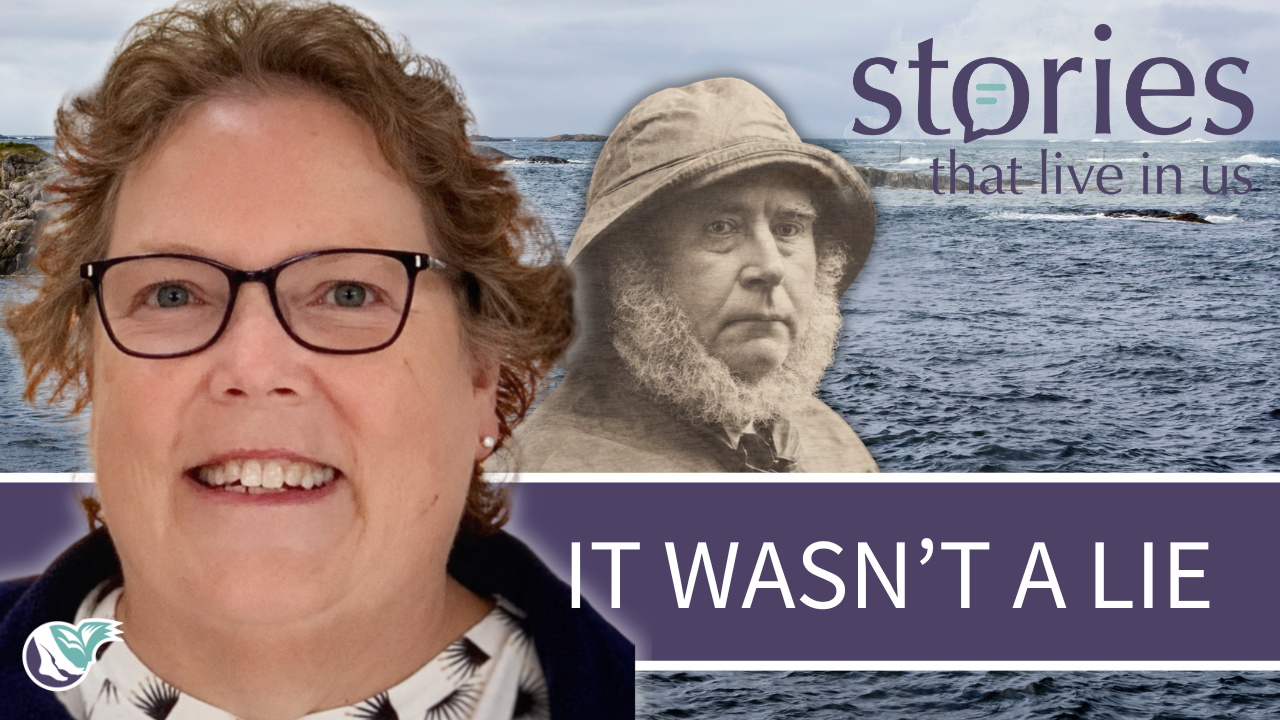
In this week's episode of Stories That Live In Us, Anne (a South Carolina native with some of the deepest roots in the Palmetto State of anyone I know) shares the story of a German immigrant who helped turn the tide of the American Revolution. And she does it with her signature mix of meticulous research, Southern storytelling, and just enough dramatic flair to make you forget you're learning history.
From a Hint to a Hero
Frederick Hambright was born in 1727 in Germany. He came to America as a boy of about eleven, moved to Virginia with his family, eventually made his way down the Great Wagon Road, and settled in the borderlands between what would become North and South Carolina. He was a justice of the peace, a church founder, a farmer, a fighter in the Cherokee Wars, and eventually a lieutenant colonel in the Patriot militia. He was also, by all accounts, a man with a thick German accent and absolutely zero patience for paying taxes to the British Crown.
By 1780, he was in his fifties, not a young man by the standards of the eighteenth century. His first wife Sarah had just died. And the infamous General Cornwallis was marching through South Carolina.
Patrick Ferguson, a capable British officer, positioned his forces at the top of a ridge called King's Mountain. (It’s technically in South Carolina, despite what the neighboring North Carolina town of the same name might suggest.) Ferguson was confident. The Continental Army wasn't anywhere near this fight. What he was up against were frontiersmen. Local militia. Men who had spent their lives hunting in the woods, carrying rifles more accurate than the British muskets, and fighting in ways that had absolutely nothing to do with lining up and marching toward each other in the open. Wearing bright red coats.
(Who thought that was a good idea? Anne asked. The British. For a really long time.)
The battle lasted 65 minutes.
About an hour in, with the Patriots pressing forward and a key commander fallen, Frederick Hambright rose up in his stirrups. Boot overflowing with blood. Hat riddled with three bullet holes. Wounded, sorely, in the thigh. And he shouted (in Pennsylvania Dutch) Huzzah, my boys, fight on and the battle will soon be over.
They charged up the hill. And won.
Patrick Ferguson was shot seven times. Cornwallis changed his entire strategy. And one of the most decisive battles of the Revolution — a battle Herbert Hoover later said deserved to stand beside Lexington, Bunker Hill, Trenton, and Yorktown — was over before supper.
The Whole Story
If you haven't listened to Anne's full episode yet, do yourself a favor and press play right now.
Prefer audio only? Click here to listen on your favorite podcast app.
🎧 Listen to the full episode to discover:
- How a simple Ancestry hint led Anne to one of the most pivotal — and least talked about — battles of the Revolutionary War
- The moment a wounded Frederick Hambright, boot overflowing with blood and hat riddled with three bullet holes, refused to dismount and rallied his men up a South Carolina hill in Pennsylvania Dutch
- Why Theodore Roosevelt called the Battle of King's Mountain "the turning point of the American Revolution"
- What happened to the loyalists in the area after the battle — and what it reveals about how people navigate impossible choices
- How Anne thinks about ancestors who were complicated, flawed, and still capable of extraordinary courage in a single defining moment
The Power of One Story
Here's the thing that gets me every single time I hear a story like this: Anne had no idea. She was just working her way back, generation by generation, in her family tree. The way all of us do. She found Elizabeth Hambright. She found Elizabeth's parents. And then she thought, “Well, that would be cool if it were true.”
She proved it.
"The great thing about doing family history is that you learn these things. I would have never known this battle."
There's a monument to Frederick Hambright at Kings Mountain National Military Park. North Carolina gave him a sword to commemorate the battle. His descendants gather every October to reenact it. And yet the story almost didn't make it to Anne. It almost disappeared entirely, the way so many stories do.
Near the end of our conversation, Anne said,
"You always want to believe that when your moment comes, you will stand up and do the right thing, even if it's hard."
And somewhere in your family tree, there’s someone who met their moment, too. You just haven’t found them yet. Frederick Hambright left us proof of his.
Your Story
You may not have a Revolutionary War soldier in your family tree. (Or you might and just not know it yet. That's rather the point.) But every family has people who faced impossible circumstances and made choices that rippled forward through generations. Your mission (if you choose to accept it) is to find them.
The questions below are a place to start.
Story Seeds 🌱
Plant these conversation starters and watch your family stories grow.
- For parents or grandparents: Do you know of anyone in our family who served in the military — Revolutionary War, Civil War, World War I or II, Korea, Vietnam, or beyond? What do you remember about their service, or about how the family talked about it?
- For aunts and uncles: Was there ever a moment in our family's history when someone had to choose a side — politically, religiously, geographically — and it changed everything for the generations that came after? What do you know about that story?
- For older relatives who grew up in a different era than you: What was it like when you grew up? What were people fighting for or against during that time? What pressures did they face that we don't talk about today?
- For yourself: If you could ask one ancestor one question about a choice they made, who would it be and what would you ask?
Story Sparks 🔑
Unlock your family's hidden stories with these research techniques.
- Search the DAR and SAR databases. The Daughters of the American Revolution (DAR) and Sons of the American Revolution (SAR) maintain extensive lineage databases of verified Patriots. If you suspect you might have Revolutionary War ancestry, search their online records at dar.org and sar.org. You may find that someone already did the hard work of proving the line and you just need to tap into it.
- Use the Ancestry Card Catalog to locate military records by state and era. Go to Ancestry's Card Catalog, filter by the relevant state (in this case, South Carolina or North Carolina) and select Military as the category. Or do a search for “Revolutionary War.” Pension files, muster rolls, and bounty land warrant applications are goldmines and often contain details about age, family members, and physical descriptions you won't find anywhere else.
- Look for county histories and local genealogical society publications. As Anne pointed out, the local histories of that Carolina borderland region are fascinating. Many have been digitized and are available on Ancestry, through Google Books, the Internet Archive, or your state genealogical society. Search for the county your ancestor lived in and you may be surprised what turns up.
- Check for loyalist ancestors too. Not everyone in your family tree was on the winning side. And that seems like it’s worth knowing. Loyalist claims and compensation records were filed with the British government after the Revolution and are available through Library and Archives Canada and other repositories. Finding a loyalist ancestor isn't a mark against your family; it's a window into how divided communities really were and the impossible choices people faced.
Ready to discover more stories like Frederick Hambright's? Subscribe to Stories That Live In Us wherever you get your podcasts. And if this episode moved you — if it made you want to go dig into your own family tree and find the people who stood up in their bloody boots — please leave us a rating and review. It helps other family story seekers find us.
© 2026 Crista Cowan. All rights reserved.