Rhode Island: A Spirit of Independence
Apr 09, 2026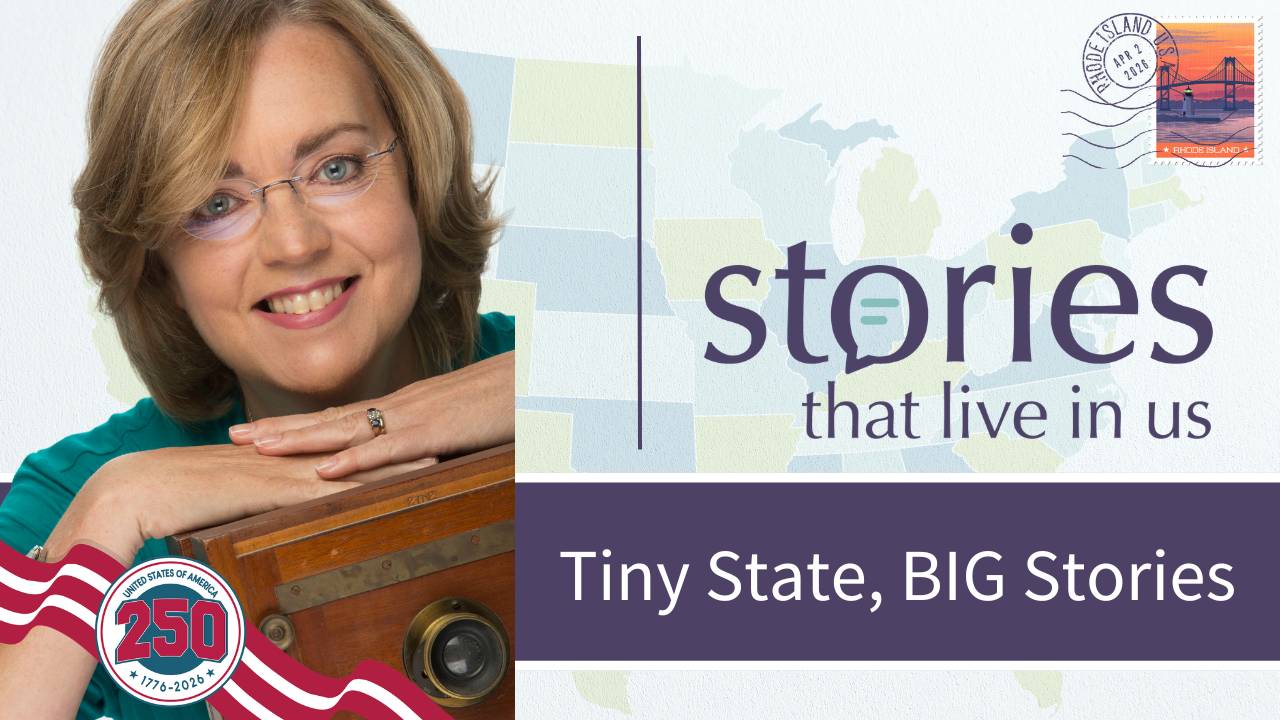
What if the place your ancestors called home could tell you as much about who you are as their names and dates ever could?
I think about this a lot. We spend so much time searching for records, building out branches, clicking through hints. But sometimes, the most powerful discoveries aren't hidden in a census or a ship manifest. They're hiding in the place itself. Hiding in the geography, the industry, the stubbornness (yes, stubbornness) of a community that shaped who our people became.
You may know Maureen as The Photo Detective®. She's been helping people unlock the stories in their old family photographs for decades. But what I didn't fully appreciate until we sat down to talk was just how deeply Maureen's identity as a genealogist, a storyteller, and even a daughter is rooted in the place she comes from: Rhode Island.
And honestly? Her story emphasized again how much place is a character in our family narratives.
The Whole Story
If you haven't listened to this week's episode yet, settle in with your beverage of choice and hear it straight from Maureen:
Prefer audio only? Click here to listen on your favorite podcast app.
🎧 Listen to the full episode to discover:
- How Maureen's mother sparked a lifelong love of family history by pulling out cigar boxes full of old photographs on stormy afternoons
- The multi-generational painting and paper hanging business that connected four generations of men in Rhode Island
- How Maureen's French-Canadian grandmother lost her U.S. citizenship simply by marrying a non-citizen and fought to get it back
- The “small world” moment when genealogist Michael Leclerc realized his family had lived next door to Maureen's family in Pawtucket
- Why Rhode Islanders once refused to use a bridge rather than pay a 10-cent toll (and what that tells us about the state's fierce independence)
- The collection of tiny jewelry pins Maureen's mother brought home from the factory and how little Maureen never left for school without one
The Power of One Story
Here's the thing about Maureen's story that stuck with me long after we finished recording: the story of her family and the story of Rhode Island are so deeply intertwined that she can’t tell one without the other.
Her great-grandfather George Taylor ran a painting and paper hanging business in Pawtucket and took in English immigrants (possibly connected through his English-born wife) who lived with the family and worked alongside them. Her grandmother crossed the border from Quebec to work in the textile mills, part of a well-worn highway between French Canada and New England that shaped entire communities. Her mother inspected cloth in the very factories that had once employed children, and later glued tiny rhinestones into costume jewelry pins in a shop around the corner from their house.
Every one of these stories is shaped by the geography, the industry, and the culture of one tiny state. The mills existed because of the water. The villages existed because of the mills. The families stayed because the bonds to each other and to the place were strong.
That's the part that I think we miss sometimes when we're building our family trees. We find a name in a census record and note the occupation: "spinner," "cloth inspector," "painter." But what if we paused long enough to ask, Why that occupation? Why that place? What was happening in that community that pulled my family there or kept them rooted?
When you start asking those questions, the names on your tree stop being data points and start becoming people. People whose choices were shaped by water power, by immigration patterns, by the fierce independence of a community that would rather drive an hour around a bridge than pay a dime to cross it.
(I mean, come on. You have to love that.)
Your Story
Think about the places in your own family tree. Not just the names of towns and states, but the character of those places. Was your family drawn somewhere by industry, by faith, by family connections? Did they stay for generations, like Maureen's, or pass through on their way to somewhere else?
The place your ancestors lived isn't just a line on a census form. It's a character in your family story — one that shaped how they lived, what they valued, and who they became. And understanding that place might just help you understand yourself a little better, too.
Story Seeds 🌱
Plant these conversation starters and watch your family stories grow.
- For Parents or Grandparents: "What do you remember about the town or neighborhood where you grew up? Was there a factory, a farm, or a business that most people worked at? How did that shape the community?"
- For Aunts or Uncles: "Did our family ever have a family business (even a small one) that got passed down? What do you know about how it started and who kept it going?"
- For Older Relatives: "Do you remember any stories about when our family first came to [town/state/country]? What brought them there, and why did they stay or leave?"
- For Siblings or Cousins: "If you had to describe the place our family is 'from' to a stranger, what would you say? What made it unique and how do you think it shaped who we are?"
Story Sparks 🔑
Unlock your family's hidden stories with these research techniques.
- Explore your ancestors' occupations in context. When you find an occupation in a census record, search that whole census for everyone in the same town with the same occupation. You might find they were the only person with that job serving the whole town or you might uncover that they were part of a larger industry. (Here are actors in Los Angeles in 1950, for example.) Then, do a little digging into local histories to see if you can figure out the significance of that occupation in that time and place.
- Search for historical photographs of your ancestor's town. The historic postcard collection on Ancestry, combined with a quick search of your state's historical society digital archives, can give you images of the very streets, mills, factories, and churches your family knew. Pair these with the names and dates in your tree and suddenly you can see their world.
- Map your family's migration pattern. On Ancestry, use the Map View of your family tree to visualize the route your family took from generation to generation. Was there a "highway" between communities (like the French-Canadian corridor Maureen described) that explains why your family ended up where they did? Seeing the pattern on a map can reveal connections you'd never notice in a list of dates and places.
One More Thing
Maureen talked about how Rhode Island's villages (not the towns, the villages) are where people really identify. You don't say you live in Lincoln. You say you live in Saylesville. The specificity matters. The place within the place is where belonging lives.
I think our family stories work the same way. The deeper we go — past the country, past the state, into the village, the neighborhood, the factory, the kitchen where a mother pulled out a cigar box full of photos on a rainy afternoon — the closer we get to the real story. The one that connects us.
Ready to discover more stories like Maureen's? Subscribe to Stories That Live In Us wherever you get your podcasts. And if this episode inspired you to think differently about the places in your family tree, please leave us a rating and review — it helps other family story seekers find us.
Want to connect with Maureen?
Website: https://maureentaylor.com/
Facebook: https://www.facebook.com/MaureenPhotoDetective/
Instagram: https://www.instagram.com/photodetective
© 2026 Crista Cowan. All rights reserved.