Stories That Connect Us: How to Get Kids Interested in Family History (And Why DNA Isn’t Enough)
Jul 16, 2026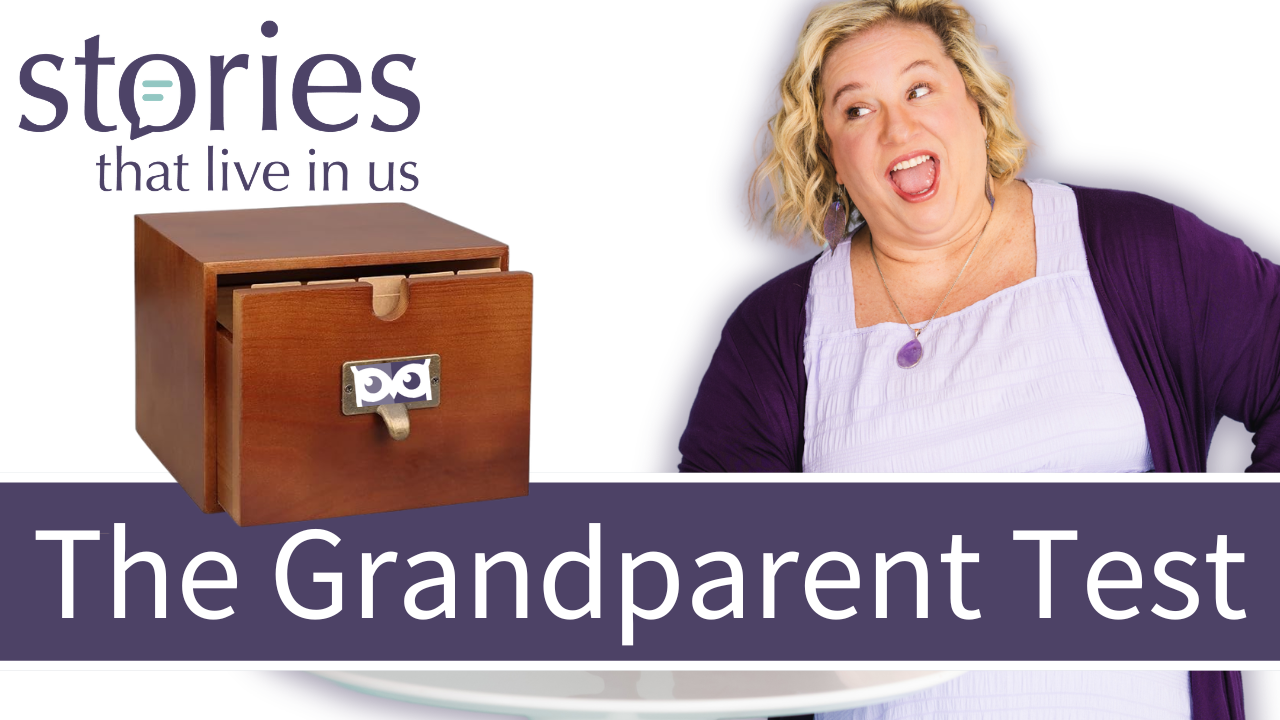
Can I tell you a secret? My favorite part of exploring my family tree isn't just discovering the stories of people who lived hundreds of years ago (though you know how much I love that part of it). It's what those stories can do for the relationships we have right now.
If you have ever tried sharing your genealogy research with your kids or grandkids only to be met with blank stares, polite nods, or sudden interest in their phones, you are not alone. It is easy to assume that younger generations simply do not care about where they came from. But recently, sitting around a smoky campfire high in the mountains of Utah, I had an eye-opening realization about how to get kids interested in family history and why handing them dates and names will never be enough.
Watch or Listen to the Full Story
Prefer audio only? Click here to listen on your favorite podcast app.
- 00:00 - Welcome to Season 3
- 02:09 - Asher's Homework & The Founder Ancestor (Samuel Mulliner)
- 04:24 - The Utah Campfire Test: Can You Name All Four Grandparents?
- 08:03 - Related on Paper vs. Connected in Feeling
- 14:01 - Introducing "One Word, One Story" (My Bubblegum Ice Cream Memory)
The Campfire Experiment: Why Facts Don't Create Connection
Last week, I served as a leader taking twenty young women camping in Utah’s High Uinta mountains. After dodging mountain wildfires, enduring snow at 9,300 feet, and dealing with a broken-down food trailer on the way up to our campsite, we spent three glorious days gathered around a single campfire ring.
As the smoke curled around us, I decided to ask the girls a simple question: Can you name all four of your grandparents?
Did you know that national statistics show 53% of American adults cannot name all four of their grandparents? As it turns out, teenagers are no exception. About half of the girls around our fire hit a total wall. One girl struggled to remember her grandmother's maiden name, unaware that she was actually living inside her family history, The surname belonged to the very house her family lived in!
Later, when the girls challenged me to name my eight great-grandparents, I rattled them off. Pointing across the fire at two twin sisters in our group, I casually mentioned:
"You know, Victor Mulliner and Mary Heaps are my great-grandparents, but they're your great-great-grandparents. Your grandma's maiden name is Mulliner. She's my dad's first cousin!"
I expected excitement. Instead, the twins barely reacted.
That was when a massive realization hit me: I had given them a fact, not a story. I had told them we were related, but I hadn't given them anything that would make that relationship feel meaningful. I couldn't expect a shared name or shared DNA to do the work of connection for me.
"A shared ancestor makes us related. A shared chart shows how we fit together, but it's the stories that connect us."
Building a "Storytelling Household"
Why do some kids naturally ask questions about the past while others remain detached? Curiosity is something we cultivate.
A few years ago, my nephew Asher was riding in my car when he mentioned a school assignment about his hometown. He asked, "Don't we have an ancestor who did something important here?"
Because Asher had grown up hearing casual family stories during Sunday dinners and car rides, he knew that the streets he drove every day weren't just pavement on a map. His family had built a life there for generations before he moved there with his parents from somewhere else. I was able to point out the mill pond created by his 4th great-grandfather, Samuel Mulliner, who emigrated from Scotland and helped found the city of Lehi, Utah.
Asher cared because he had been raised in a storytelling household. When children hear the same family phrases, the same birth stories, the vacation disasters, and the stories of who showed up and survived, those stories stop being something adults tell. They become something the child simply knows: This is who my family is, and that means it's a part of who I am.
3 Ways to Turn Ancestral Facts Into Living Stories
If you want to pass down your family heritage to the next generation without boring them, try shifting your focus from dates to lived experiences:
1. Give Context Before Surnames
Instead of telling a teenager, "This is your great-great-grandfather Victor," tell them about how Victor used to drive his beat-up pickup truck around Los Angeles as though stoplights were mere suggestions. Specific, vivid human details build an immediate mental bridge across generations.
2. Pair Visual Charts With Verbal Storytelling
A visual family tree chart (like a custom printed heirloom from Family Chartmasters™) is a wonderful anchor for a family reunion or living room wall. It shows visual learners exactly where they fit. (Just be sure to use chart as a catalyst for sharing stories not as a test of memorization.) 😉
3. Open the "Story Drawer" With Simple Prompts
Those of us deep into family tree building, tend to spend hours cataloging historical records in our Ancestry® family trees or digging through old newspaper archives, but what about our own everyday memories? You don't need a grand historic event to share a meaningful moment.
To help you share your uncatalogued memories, I am starting a new weekly segment called One Word, One Story. Every week, at the end of each episode, I pull one ordinary, random word out of "The Story Drawer" and share whatever memory pops into my mind.
Our very first word was ice cream. It brought back a vivid childhood memory of riding my bike two blocks to Thrifty (I would have sworn it was called Lucky but I’ve been corrected) drugstore in Turlock, California. I spent my own hard-earned quarters on a double scoop of bubblegum ice cream. And let me tell you that trying to chew on rock-hard gumballs in frozen ice cream was a challenge! It’s amazing I have any teeth left. This was a simple, funny memory, but it’s the exact kind of story that helps younger family members see us as real people who were once kids just like them.
One of my pajamas & pedigrees™ community members has already taken this story prompt and run with it. He suggested in our community group that everyone start a family text thread and share the prompt each week to see what stories get shared. I LOVE IT!
Story Seeds 🌱
Use one (or all!) of these conversation starters at your next Sunday dinner or family gathering and watch connection grow across generations:
- "Can you name all four of your grandparents—including their maiden names?"
- "What is one funny or wild story about how someone in our family used to drive?"
- "What was your absolute favorite treat to buy with your own allowance or chore money when you were growing up?"
- "Is there a building, street, or landmark in our town that our family has a personal memory attached to?"
Story Sparks 🔑
Ready to put this into practice this week? Here are three simple steps to start turning facts into connection:
- Take the 4-Grandparent Challenge: Ask your children or grandchildren if they know the full names of all four of their grandparents. Use any missing names as an opportunity to tell a personal story about that grandparent's personality or childhood. Better yet, if that grandparent is still living, give them a call and invite them to share a story of their own.
- Anchor Your Family History Visually: Hang a pedigree chart where your family can see how they fit into the bigger picture. Start the chart with your children or grandchildren and go back to their parents, grandparents, great-grandparents and more. (Get a simple pre-designed chart automatically printed with the data you’ve already collected in your online family tree or desktop software program or buy a “fill-in-the-blank” version and have your children or grandchildren fill in their own.)
- Tell One Personal Story This Week: Follow along each week on the podcast with our “One Word, One Story” pick from The Story Drawer. Write up one page and include a picture. Then gift all of your stories to your family in a notebook. Or start a family text thread and have everyone share. Getting in the habit of sharing these 2-minute memories will nurture a culture of storytelling in your family that will deeply connect generations.
Let's Connect
Telling your family story doesn't only mean sharing historical records and pedigree charts. It also means sharing your own lived experiences while you are still here to tell them.
- Join the Community: Get weekly storytelling prompts and research strategies delivered directly to your inbox through my newsletters, Monday Footsteps and Friday Footnotes.
- Deepen Your Roots: Connect with fellow family historians inside our membership community, pajamas & pedigrees™.
- Listen On The Go: Subscribe to the audio feed of Stories That Live In Us on Apple Podcasts or Spotify.
© 2026 Crista Cowan. All rights reserved.