Maine: Memories Making History
Jan 29, 2026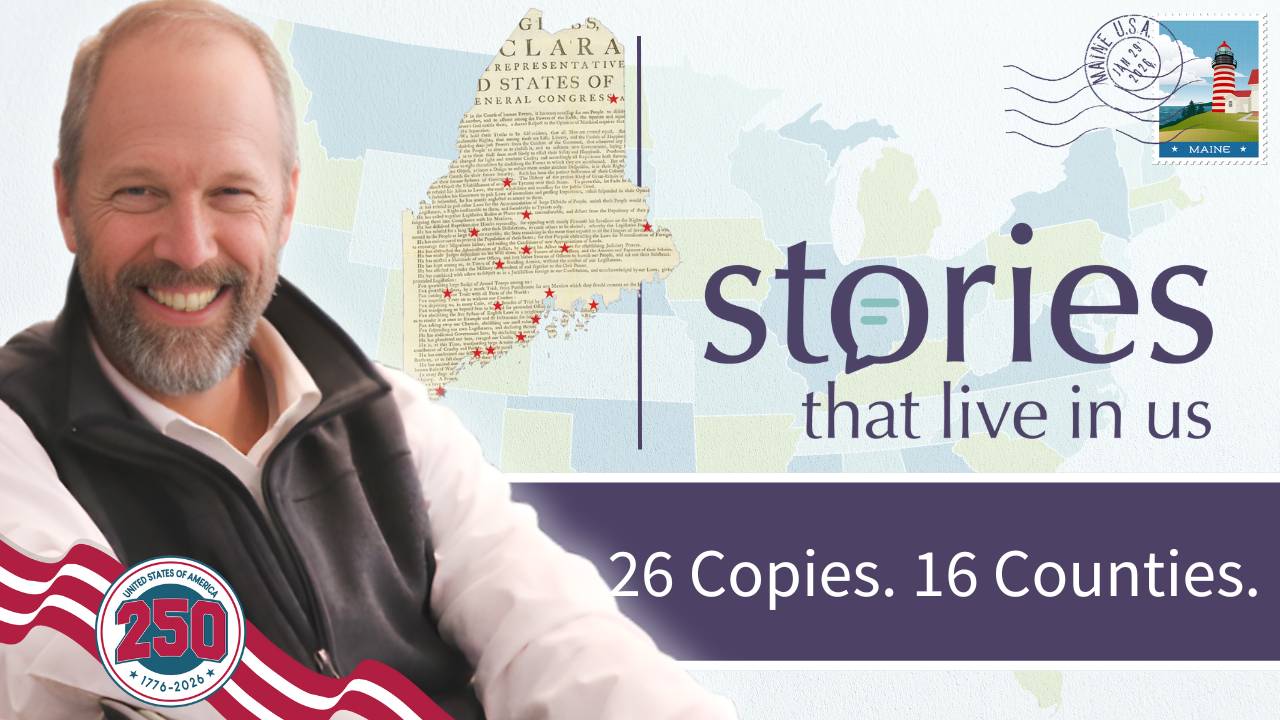
Have you ever wondered why certain places hold such power over our hearts? Why the sight of a particular mountain or the smell of salt air can bring tears to your eyes? What if I told you that those emotional connections aren't just about beautiful landscapes? They're about the layers of human stories woven into every corner of those places.
That's exactly what Steve Bromage has spent his career understanding. As Executive Director of the Maine Historical Society, he's discovered something remarkable: the most powerful history isn't locked away in climate-controlled vaults. It's alive in the memories of elderly volunteers at small-town historical societies, in the photographs tucked away in community attics, and in the stories that middle school students uncover when they start asking questions about what has happened in their own backyards.
A Journey That Started in the Backseat
Steve's story begins the way so many of our best family stories do—on a long car ride. Growing up in New Jersey, he spent his childhood making the six-hour trek to his family's camp in Maine. Those drives weren't just about getting from Point A to Point B. They were about the landmarks along the way, the stories of "who did what to whom," the running joke about which child got left at which rest area, and the sacred rule about not crossing the center line of the backseat.
"Everything about getting to Maine was very formative," Steve reflects. What started as family tradition evolved into something deeper, a recognition that Maine's special sense of place came from generations of families just like his, creating memories in the same locations, year after year after year.
But here's what makes Steve's story so compelling: he didn't just fall in love with Maine. He dedicated his entire career to ensuring that everyone's Maine story gets told.
The Whole Story 🎙️
Haven't watched the episode yet? Click here to hear my full conversation with Steve:
Prefer audio only? Click here to listen on your favorite podcast app
In this episode, you'll discover:
- How Steve's childhood road trips to Maine shaped his understanding of place and family connection
- The innovative way Maine Historical Society is using technology to preserve local stories
- Why middle school students became some of Maine's most important historians
- The remarkable story of how a 19th-century autograph collection included one of only 26 surviving original copies of the Declaration of Independence
- Maine Historical Society's ambitious plan to take the Declaration on a 16-county tour for America's 250th anniversary
- How Steve transformed from "history lover" to someone who sees history as a force for contemporary civic life
The Power of One Story
There's a moment in my conversation with Steve that stopped me in my tracks. He talks about how the Maine Memory Network started with a simple question: What if we could help small historical societies (often run by elderly volunteers, only open seasonally, invisible even in their own communities) share their treasures with the world?
What emerged was revolutionary. By creating a platform where anyone could scan and upload historical materials, they didn't just build a digital archive. They collapsed institutional and geographic boundaries. Suddenly, you could see Civil War stories from across the entire state side by side. You could understand how industrialization affected different communities. You could trace patterns and connections that were invisible when each collection sat isolated in its own small building.
But the real magic happened when they asked a different question: What if we let each community decide which stories matter most to them?
That's when history became participatory. That's when it became alive.
Steve describes watching middle school students, kids who thought they lived in "meh" towns, discover photographs of grand hotels in their communities. These same kids started researching, creating online exhibits, making presentations to their town councils. They weren't just learning history. They were making history by deciding which stories from their communities deserved to be preserved and shared.
"I think so much of what makes Maine special is its history and its communities and its people and the way people have lived generation after generation."
This isn't history as a series of dates and battles. This is history as the lived experience of real people in real places. People just like us, facing challenges not so different from our own.
Your Story
As I listened to Steve talk about Maine's special sense of place, I couldn't help but think about my own experience standing on that balcony in Utah, looking at Mount Timpanogos and crying because my great-grandmother had looked at that same mountain every single day of her life.
Place matters. Stories matter. And the intersection of the two—well, that's where the real magic happens.
So here's what I want you to consider: What's the "Maine" in your family story? What's that place that holds generations of your family's memories? And more importantly, what are you doing to capture and preserve those stories before they're lost?
Story Seeds 🌱
Plant these conversation starters and watch your family stories grow.
- For Parents/Grandparents: "What's a place that feels like 'home' to you, even if you don't live there anymore? What memories are attached to that place, and who else in our family shares those connections?"
- For Aunts/Uncles: "Do you remember family road trips when you were growing up? What were the landmarks you looked for along the way? What games did you play or songs did you sing to pass the time?"
- For Siblings/Cousins: "If you could only preserve three family traditions for the next generation, which would you choose and why? What makes those traditions meaningful to you?"
- For Anyone: "Is there a place in our family history that we've lost connection to—maybe where ancestors lived before they moved, or a family gathering place that no longer exists? What stories do you know about that place?"
Story Sparks 🔥
Unlock your family's hidden stories with these research techniques.
- Explore State and Local Historical Societies: Don't limit yourself to state archives. Many states, like Maine, have robust historical societies with collections that go beyond official government records. Search for "[your ancestor's location] historical society" to discover repositories of business records, photographs, diaries, and local newspapers that can bring your family's community to life.
- Look for Digitized Local Collections: Search for online digital museums and community history projects. Many states have created platforms similar to Maine's Memory Network where local organizations have uploaded historical photographs, documents, and exhibits. Try searches like "[state name] digital history" or "[county name] historical photographs" to find these hidden treasures.
- Connect with Local Schools and Libraries: When researching a specific location, reach out to local schools and public libraries. Many communities have created local history projects with student participation, oral histories, or community documentation projects that might include information about your ancestors.
- Use the "Sense of Place" Research Method: When you hit a brick wall with an ancestor, shift from searching for specific names to researching the place where they lived. Learn about the major industries, religious communities, migration patterns, and social institutions in that location during that time period. Understanding the context often provides clues about where to find records and what your ancestor's life might have been like.
A Sacred Document, A Revolutionary Idea
I have to tell you about one more thing Steve shared that absolutely blew my mind. Maine Historical Society owns one of only 26 surviving original copies of the Dunlap Broadside. It's the first printed version of the Declaration of Independence, created on July 4, 1776, so the word of independence could be spread to the colonies.
For the 250th anniversary of American independence in 2026, they're not keeping this sacred document locked away in a vault. They're taking it on tour to all 16 of Maine's counties so that every single Mainer has the opportunity to encounter it in their own community.
Think about that level of commitment to accessibility. Think about what it means to say, "This belongs to all of us, and everyone deserves to experience it."
That's the philosophy Steve has brought to everything Maine Historical Society does. History isn't meant to be locked away, accessible only to those who can travel to special repositories or navigate complex research systems. History is meant to be shared, explored, and made relevant to contemporary life.
As Steve puts it: "Each of our stories matters, each of us is a contributor, we're all stewards of this place."
The Invitation
Steve's work in Maine offers a powerful model for all of us who are trying to uncover and share our family stories. Whether you're working on your own family tree, trying to document your community's history, or simply wanting to understand your own sense of connection to the places that matter to you, the principles are the same:
- Everyone's story matters. Not just the famous people, not just those who left extensive written records. The factory worker's story is as important as the factory owner's.
- Place creates connection. Understanding the landscape, the community institutions, the local industries and challenges—all of this helps us understand our ancestors as real people living real lives.
- History is participatory. You don't have to be a professional historian to contribute to preserving your family's story. In fact, you're probably the best person to do it because you understand what matters most.
- Technology can democratize history. Whether it's scanning old photographs, recording family stories on your phone, or uploading documents to family tree platforms, we have tools our ancestors never dreamed of for preserving and sharing stories.
Steve was a "bicentennial kid"—ten years old in 1976, watching his dad ride a high-wheel bicycle in the parade in Philadelphia, absorbing all that celebration of American history. That experience shaped his entire career. Now, as we approach America's 250th anniversary, he's ensuring that the next generation of Maine kids will have their own transformative encounter with history.
What's your 250th anniversary plan? What story will you make sure gets told? What connection will you preserve?
Ready to discover more stories about how history creates family connections? Subscribe to Stories That Live In Us wherever you get your podcasts, and never miss an episode.
Found this episode inspiring? Please leave us a rating and review—it helps other family story seekers find us and join our community of people who believe that understanding the past enriches the present.
© 2026 Crista Cowan. All rights reserved.