New York: A Melting Pot of Resilience
Apr 23, 2026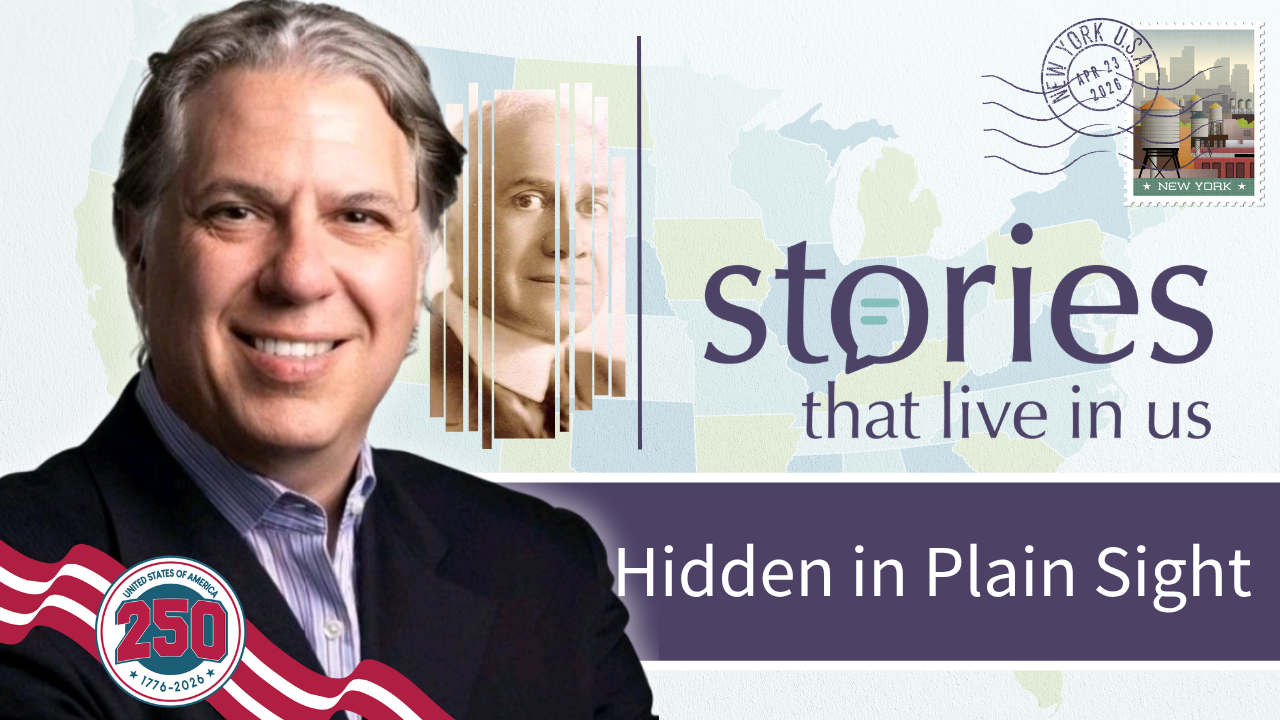
What would you do if a single letter revealed that everything you thought you knew about your family was only half the story?
That's exactly what happened to Scott Pratt. He walked into a historic Brooklyn church expecting, maybe, to find a thread connecting him to his Scottish colonial roots, possibly even Alexander Hamilton. (His words, not mine. 😄) What he found instead changed everything.
But before I tell you more, I need you to do something first.
Railroad Ties - Ancestry and SundanceTV
If you haven't seen Railroad Ties, the documentary Ancestry filmed with SundanceTV back in 2019 as part of the Sundance Film Festival, stop right here and watch it. I'll wait.
It's the story of six individuals — descendants of both enslaved people and the abolitionists who helped them escape — who were brought together at a historic church in Brooklyn, New York. It is one of the most powerful pieces of storytelling I've ever seen, and it's the foundation for everything Scott and I talk about in this episode.
And if this story resonates with you the way it has with me, you might also want to go back and listen to Episode 29 of Stories That Live In Us, where I had the chance to sit down with Gayle George, another one of the remarkable individuals from the Railroad Ties documentary, to hear her story.
Okay. Now let's talk about Scott.
The Man Who Thought He Was Looking for Alexander Hamilton
Scott Pratt grew up as, in his own words, "just an Italian kid from Jersey." His grandmother made cannolis. His great-grandmother still spoke Italian. He took Italian in high school and his teacher, Loop, gave him a hard time about it every single year. (Three years, Loop. Three years.)
On his dad's side, there was proud Scottish heritage. His father wore a kilt to Celtic festivals and was convinced they were connected to colonial New England. The last name Pratt does have deep colonial roots (Brattleboro, Vermont, to be specific) so it wasn't a crazy theory.
On his mom’s side, Scott had a Japanese grandfather, a man so beloved by the family that they called him "the Babe." He was the center of a world full of strong Italian women who ran everything, and he seemed perfectly content to let them.
So when Ancestry reached out and asked Scott to participate in a documentary being filmed at a historic church in Brooklyn (his mother's hometown) he was excited. Curious. Ready to maybe find Alexander Hamilton.
He was not ready for what he actually found.
"I Was Prepared for Either Scenario"
Inside that Brooklyn church, Scott was handed a letter. And in the moments before he opened it, he told me something I found incredibly honest and moving:
"In my mind I'm thinking, wow, this is either gonna go really, really well, or it's gonna reveal something about me and my family that I'm gonna have to atone for."
He'd fallen in love with everyone in that room. He didn't know if he was the hero of this story or the villain. He opened the letter anyway.
What he learned is that he is a direct descendant of Sophia. She was a light-skinned Black woman who escaped slavery on the Underground Railroad with her children, made it through Brooklyn (thanks to a ship captain who claimed yellow fever was on board, keeping inspectors from boarding), and eventually found her way north to Massachusetts and freedom.
Scott's whole life changed in seconds.
The Whole Story
I really want you to listen to this episode in its entirety, because I can't do it justice in a blog post.
Prefer audio only? Click here to listen on your favorite podcast app.
🎧 Listen to the full episode to discover:
- The tension of being in that Brooklyn church, not knowing which side of history your family falls on and choosing to be present for it anyway
- Sophia's escape through New York, a city that was largely pro-slavery at the time because of its economic ties to Southern goods
- Marietta, Sophia's daughter, who died in 1931, just 40 years before Scott was born. As Scott said: "When you put those things into historical perspective, that is nothing."
- Frank, Marietta's son and Scott's great-grandfather, who became a silent film star in New York and kept a journal about passing for white in America that now sits in the Harvard Library
- John Sasa, Scott's Japanese great-grandfather, who Americanized his name to avoid the stigma that followed Japanese Americans during WWII and whose identity was quietly erased in much the same way Sophia's was
- The grief that comes with discovering hidden stories: not just the wonder of it, but the profound sense of loss for the time, the connection, and the stories that can't be recovered
- Scott's recent acceptance into a master's extension program at Harvard, where his focus will be on bringing skin-of-color representation into dermatology and medicine roots reaching forward in the most remarkable way
The Power of One Story
What strikes me most about Scott's story and what I think makes it so important for all of us is that his family didn't just have one hidden story. They had two.
On one side: a Black woman who survived in a remarkable way and her daughter whose light skin allowed her and her children to pass as a survival tool, until that survival strategy became erasure.
On the other side: a Japanese man who changed his name, integrated himself into an Italian family, and let that become the whole story. Until it wasn't.
Two families. Two different kinds of passing. Two kinds of loss. And one man standing in a Brooklyn church trying to figure out how all of it adds up to him.
There's something Scott said near the end of our conversation that I keep thinking about:
"When you have the full story, it's way better than when you're trying to fill in the holes. You just feel like a part of you is missing, like there's a secret passenger."
That phrase — secret passenger — it’s so telling. Because that's what unexamined family history is, isn't it? A secret passenger, riding along in our DNA, shaping how we move through the world, quietly influencing who we become, even when we don't know it's there.
The question isn't whether your family has stories like this. The question is whether you're ready to find them.
Your Story
Scott's story is dramatic, yes. Not everyone is going to sit in a Brooklyn church and discover they're descended from an Underground Railroad survivor and a silent film star. (Though honestly, after years of doing this work? I would not bet against it. I mean, this isn’t even the first silent film star discovered in a family tree this season. Remember our California episode?)
But the themes underneath Scott's story? Those are universal.
The identity passed down without explanation. The ancestor who changed their name, their story, their presentation to the world and took the original version with them to the grave. The family member whose heritage was quietly shelved in the interest of survival or assimilation or just getting on with life. The grief of finding out there was so much more, and the work of figuring out what to do with that.
I would be willing to bet that something in this episode is going to shake something loose for you. And when it does, here are some ways to follow that thread.
Story Seeds 🌱
Plant these conversation starters and watch your family stories grow.
- For Parents or Grandparents: "Did anyone in our family ever change their name or go by a different name? Do you know why?”
- For Older Aunts and Uncles: "Was there ever a part of our family's background that wasn't really talked about when you were growing up?"
- For Siblings or Cousins: "Is there a part of our family's story that has always felt a little fuzzy or incomplete to you? Something that was sort of mentioned or that you overheard but was never really explained?"
- For Yourself: "What's the part of my family's story that I've always just accepted without really asking questions about? What would happen if I started asking?"
Story Sparks 🔑
Unlock your family's hidden stories with these research techniques.
- Search census records for racial designation changes. One of the most powerful things you can do when researching ancestors who may have passed for white (or passed in any direction) is to look at how they were recorded across multiple census years. If your ancestor's racial designation changes, that's a story worth following. Use the new census compare feature on Ancestry to look at them side-by-side.
- Look for name changes in naturalization and immigration records. Like Scott's Japanese grandfather, many immigrants Americanized their names. Find naturalization papers, passenger lists, and border crossings that can help you identify what a name may have been before they changed it. (And trust me - they are the ones who changed it, nobody did it to them. And it certainly wasn’t done at Ellis Island.)
- Use AncestryDNA Origins as a conversation starter, not a conclusion. If your DNA results include an unexpected region — African ancestry, Indigenous ancestry, a percentage that doesn't match the family narrative — that's a signal worth paying attention to. Take a look at the regions but pay even more attention to the Journeys. And be sure to look at the breakdown “by parent” to see which side of your family a particular region or journey may be coming from.
- Search newspaper archives for ancestors who had public lives. Scott's great-grandfather, Frank Andrews, has an IMDB page because he was a silent movie star. Would you know to look? Search Newspapers.com for mentions of ancestors you'd never think to search for and go beyond just looking for obituaries. Look for business notices, legal records, social columns, and yes, even entertainment news.
If this episode moved you — and I'm betting it did — will you take a moment to leave a review wherever you listen to podcasts? It's one of the best ways to help more people find these stories, and I read every single one.
And if you know someone who's been sitting on an Ancestry account wondering what to do with it, wondering if their family even has stories worth finding — send them this episode. Because Scott's story is proof that the answer is almost always yes.
© 2026 Crista Cowan. All rights reserved.